Wednesday, November 28, 2012
Celebrate the Close of November
...with a poem on decline, the theme of themes to ponder as December approaches. Read "A Promised Mutiny" in the Entroper.


Sunday, November 18, 2012
Notes from the South Jersey Underground

SIX NEW POEMS of mine are available for you to read in the latest issue of the South Jersey Underground. My stuff starts on page 28. There are also some pretty pictures to look at along the way as you flip and Sweet Jane by the Velvet Underground may or not be playing in the background.
Wednesday, November 14, 2012
Poetry from Austria, Fiction from the Future
Here are some links to follow for your consideration. There are various publications out there you can see me in though I think they both require a fee. However I'm not the only one featured, so maybe you'll see someone else you like or know alongside me.
I have a poem in this issue of Poetry Salzburg. As the title suggests, it's from Austria.
Here at the Speculative Edge, you can find a short story of mine. It's Dickish, that is, Philip K. Dickish. Also you can vote for it as the best of the issue.
I have a poem in this issue of Poetry Salzburg. As the title suggests, it's from Austria.
Here at the Speculative Edge, you can find a short story of mine. It's Dickish, that is, Philip K. Dickish. Also you can vote for it as the best of the issue.
Saturday, November 3, 2012
I Wish I Had Something Wonderful to Tell You
But I don't. Nothing enough to vote for at least. You can watch this disturbing clip instead.
Saturday, October 13, 2012
Make Your Own Attack Ad and Read Some Poems
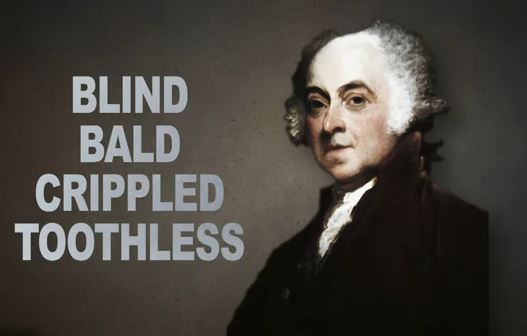 |
| He was also called hermaphroditical |
Another poem of mine is up at Misfits' Miscellany
And here is one you can read over at Bard Is Bong.
Wednesday, October 10, 2012
An American Diplomat in Franco Spain: A Book Review

An American Diplomat in Franco Spain by Michael Aaron Rockland (paperback, 178 pages, Hansen) is a memoir from a former member of the Foreign Service who was stationed in Spain during the late 1960s, a period of time when the country was still under the dictatorship of Francisco Franco. The work is a quick read and filled with many amusing anecdotes along with comparisons between the American and Spanish ways of life. Several famous figures make an appearance within its pages as well as a first-hand account of a military disaster that threatened to become Spain's version of Chernobyl. However, Rockland's work has a tendency to digress into observations about the present as well as his life back in the States after serving in Spain. Both of these make the book seem padded for length. In addition, even though the term "Franco" and "Spain" are in the title, the memoir itself deals little with the everyday reality of life under the Caudillo.
At the heart of the memoir is the story of a young diplomat's struggle to put his personal politics and beliefs aside to serve his country abroad. When Rockland arrives in Spain, he is overjoyed to be in a land whose language and culture he admires, but he is dismayed having to work with a fascist regime his parents raised him to oppose. Making matters worse, Rockland often encounters ex-Nazis the government is sheltering at routine diplomatic functions. Rockland does try to resist as best he can without becoming a persona non grata. In one scene for instance, the author manages to sneak out of having to shake Franco's hand when the dictator comes to an event and the other diplomats have to stand in a line to greet him. As his time at the embassy goes on, Rockland's idealism wears away and when he is transferred from Madrid to Saigon, he decides to leave the Foreign Service for good.
But he makes the most of his time in Spain and treats the reader to a series of amusing anecdotes and encounters. As an aspiring writer, Rockland visits the haunts of Ernest Hemingway and meets a female bullfighter who has a secret theory that explains why the famed author killed himself. Meanwhile, he engages in a battle of wills and wits with his neighbor's dog, whose owners he suspects of being Nazis exiled from Romania. He also learns to adapt to his position as a Jew in Spain, which means clarifying numerous misconceptions among the Spanish, such as Jews having horns. For his part, he learns not to take offense at such things as the costumes of the Semana Santa despite their resemblance to those worn by certain groups back home. In a particularly fascinating turn of events, Rockland's son auditions for and wins a role in the movie Dr. Zhivago, which was filmed in Spain.
Through his position at the embassy, Rockland gets to meet some of the important people of the era. One of these is Martin Luther King Jr. The author acts as an unofficial interpreter and assistant to the civil rights leader while he stops in Spain for a brief visit as part of a tour of Europe. In their time together, Rockland gives King a lesson in geography and helps him get over a bout of diarrhea. King makes Rockland realize his own prejudices, particularly against the South, and that Black Southerners are as much a part of the region and its culture as are its Whites. A little while later, the diplomat meets Ted Kennedy and largely performs the same role for him, except that he also gets to serve as the senator's social companion. This comes with the downside of having to pick up the Senator's bar tab, which serves as another reality check for Rockland because it was his idolization of JFK which lead him into the Foreign Service in the first place. He is also involved with the diplomatic response to the Palomares incident when a B-52s collided with a Stratotanker over Spain during a refueling mission. The collision caused the bomber to inadvertently drop several hydrogen bombs which had to be retrieved without setting off mass panic. In the end, Rockland went for a swim off the coast with Ambassador Angier Biddle Duke to assuage concerns about radioactivity
Despite these picaresque incidents and others, they are not enough to justify a book-length treatment for Rockland's years in Spain. All too often, the chapters are bulked up with gratuitous asides which take the reader out of Franco's Spain (or Francoist Spain, why "Franco Spain" was chosen for the title is a mystery) and into the present with only the flimsiest link to the author's experiences in late sixties Madrid. Sometimes the asides can be interesting, such as his observations on bullfighting and tipping, but they still digress, along with his idea to have special personal ads for garlic eaters. All too often, Rockland tackles topics such as Columbus, cosmopolitanism in America, the Protestant work ethic, and our changing terms for Black Americans, instead of discussing the nature of the dictatorship he had to work with.
Tuesday, September 25, 2012
F. Scott Fitzgerald Fights Back!
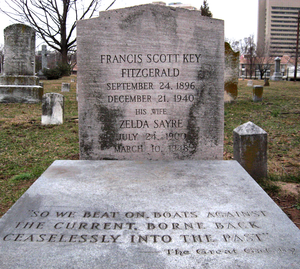 |
| Lovely, lovely Rockville |
Also, here is another poem to read at Ol' Chanty. Just search for my name and scroll down.
Friday, September 21, 2012
A Penny for Your Thoughts, a Nickel for Your Steak

Now let's get onto the main course since we've already devoured our Madeleines. At Nickel Steak I have two poems for consumption.
Buon Appetito!
Saturday, September 15, 2012
My First Attempt at a Meme
I saw this ad for Mitt Romney on Facebook today and knew I had to do something with it:
 So I thought I might work with it a little to "make it new" in the parlance of Ezra Pound. Here's what I came up with. Keep in mind I am new to this 21st century game:


Friday, September 7, 2012
Show Time: A Book Review

Another book came for me in the mail a while back and I finally got around to reading it. Today's review is for Phil Harvey's Show Time, a 257 page novel from Lost Coast Press. Lord of the Flies meets Survivor in this tale of seven reality TV contestants left stranded on an island in the middle of Lake Superior live in front of an international audience. However, despite this promising premise, Harvey's novel falls flat, with clunky and far-fetched dialogue, too many loose ends, and a failure to take account of the ways reality TV has changed since the late 1990s. Despite these flaws, the novel does hold some appeal if one forgets the reality TV show aspect and focuses instead on the characters' attempts to survive in the wilderness and make it through winter without starving to death.
Show Time is set in the not so distant future, when the viewing public has become bored with what violence is offered to them on the TV. To satisfy this demand, a group of TV executives have created a new breed of reality show, where seven contestants are brought together on an island and have to survive the elements and one another. If they can make it, the contestants will win $400,000 apiece. The group onsists of four men and three woman. Each one brings skills of their own, but also faults which threaten their ability to work together to improve their odds of survival. Most of the novel centers on Ambrose, who is a capable and levelheaded, but suffers from a severe gambling addiction that he can only pay off by participating on the show and winning.
One of the fascinating parts of the novel deals with how the characters enter into a shifting array of alliances to secure food, shelter, and other supplies. Even though the seven adults know they are being watched and judged by millions of people, it does not take long until their true, instinctual natures emerge. Harvey posits an interesting take on the different philosophies of human nature, which reality television is a ready means of conveying. However, they do not surrender to their violent impulses and create a purely Hobbesian world of endless strife on the island. Nor do they build a peaceful Utopia fit for Rousseau's noble savage. Instead, their self-interest motivates them to work together in a Machiavellian fashion. A barter economy is set up where anything, including sex, can be exchanged for goods and the contestants continue to vie for power, especially the males Ivan, Rudy, Ambrose, and Valentin.
The novel could have spent more time focusing on this development, showing how over time the behavior of the individuals on the island becomes more institutionalized and the effects of their division of labor. The lives of the female characters, Ahai, Maureen, and Cecily would also have been interesting to spend time on. Would their trading sex for protection and food become more regulated over time in this evolving dynamic? Or would they eventually be forced to deny their right to participate in such exchanges? The world of the executives producing the television show needed work as well. It could either have been expanded or dropped altogether. Throughout Show Time, the people putting the drama together constantly speak of how the violence of the show is necessary to keep the population pacified but this idea is never quite fleshed out with too much telling and not enough showing.
Instead, their are too many scenes which seem designed to merely showcase the authors' idea of "snappy" and "witty" dialogue. Unfortunately it is this dialogue which is likely to take the reader out of the world of the novel. All too often the characters resort an affected speech that seemed drawn from pulp and noir novels and is out of place, especially among people starving in the wilderness. These ridiculous exchanges made me put down the book and write either "wtf," "ugh," "really?", or just "?" next to the offending passages. It is not a good sign for a novel when a reader has to stop eating their malai kofta and feels compelled to mark up your book.
Nevertheless, it is a quick and compelling enough read when the novel centers on the inhabitants of the island, and no one mentions or worries about the the cameras. These sections which deal with simply trying to survive are engaging and well written, even if they tend to get repetitive. There are only so many different ways of writing hunting and fishing scenes. Harvey also does a decent job of dealing with the effects of expose to prolonged calorie reduction and heat deprivation. At times it seems the whole reality show conceit is just a way to write a novel about survival instead a scathing commentary on the media and American culture. It seems difficult to believe people would spend so many months risking death or serious injury just for $400,000 when there are so many other televised contests that require far less risk for far greater reward.
Show Time treads on previous concerns of where reality television might be heading without adding anything new to the discussion. More importantly, it ignores the ways reality TV has changed since it initially become popular with Survivor. This work might have been timely in 1999, when shows were centered around competitive ordeals held out in the dark wilds of nature. Now, it feels dated, showing us a vision of a future which seems unlikely due to the rise of shows which deal with the lifestyles of the somehow rich and famous. These have become America's current opiate, not bloodletting spectacles. True, we are glued to our television sets so we can watch others' bad behavior, but these deprived actions occur within civilization, not outside of it.
Wednesday, September 5, 2012
Into September with an Auction Silence
 |
| I have a poem up at the Junk Lot Review. Be quiet and contemplate it. |
Saturday, September 1, 2012
When Sartre Talked to Crabs
| "Good morning, my little ones, how did you sleep?" |
I think this section from Plato's Apology (spoken by Socrates) pretty much explains how I feel about this poem of mine in the Fox Chase Review.
Thursday, August 30, 2012
The Artist Mystique, I Has It
See this? This is a link. The link will take you to the Artist Mystique. Once there, you can read their issue online. Be on the lookout of my poem, "I take Scissors to Newspaper."
See this? This is another link. This link will take you to Pyrokinection. Once there you will not have to flip any pages physical or electronic. Instead, you can just read the poem right on the screen. The name of this poem is "Bloom a Song."
This is a free service. Enjoy the lines. Email me if you are not having fun. Sovegna vos al temps de mon dolor.
Sunday, August 26, 2012
The Online Empire of My Presence Is Expanding
Getting published in other people's websites is pretty much all I'm good for anyways.
Poem up at Dead Beats.
Poem in the last edition of Guerrilla Pamphlets.
Friday, August 24, 2012
Louis H. Berman of Annapolis, Maryland Is an Idiot
Sometimes I read a letter to the editor at the
Washington Post and suffer a minor attack of apoplexy. Unfortunately since I cannot go to a doctor for a cure and the apothecaries are all closed, I must turn to the next best substitute for leeches: a blog post. Louis H. Berman's letter here, buried away in the paper like a hateful jewel, is today's culprit. In a few spare paragraphs, Mr. Berman asserts the following about what's
wrong with the Millennial Generation and while he spouts nonsense, in the
process he reveals what is most wrong with the United States: namely that we have
become a country willing to believe the most absurd and malicious lies about our fellow Americans. In sum, this is Mr. Berman's "argument:"
1) Millennials are spoiled and lazy
2) This is the fault of the Baby Boomers
3) However, the reason for high unemployment is still not their fault. Even though they were not in charge of Wall Street when it wrecked the economy, blame falls on the Millennials instead.
4) There are plenty of jobs for Millennials but they are too spoiled to find one.
5) Millennials are supposed to "learn something" from their parents (who spoiled them in the first place) about what being in a real workplace means.
I think Mr. Berman needs to go back and actually read the classifieds and want-ads some time. Sure there are plenty of jobs, but many require several years of experience and a decent portion of what do not are unpaid. Try looking for entry-level work Mr. Berman as I have, for multiple companies, in several fields, in different cities. It might be better than just talking out of your ass to tell the damn kids to get off your lawn. Now, you may claim that the Millennials are just too spoiled to take minimum wage, which was supposedly good enough for the folks of your generation. Remember that minimum wage was good enough for all of you because it was higher. A minimum wage job today pays less now when adjusted for inflation. Also, you may not know this because higher education used to cost a lot less, but many Millennials have college debts and need to earn money so that they can pay them off, debts they incurred in the first place so that they might not have to work for minimum wage all their lives.
I'm going to be generous Mr. Berman and assume you are not being motivated by spite, but rather an adherence to the just-world fallacy. In your view, unemployment is high because people are lazy and spoiled, especially young people. I hate to break it to you (who am I kidding, I enjoying enlightening you), but there are not enough jobs to go around. Roughly speaking, there are 3.5 unemployed people per each of the much vaunted job postings you discussed. No matter how many skilled people apply for a position, they are not all going to get it in this economy. The same applies even if they all decide to take minimum wage jobs. Have you been following the news? 44% of minimum-wage workers have either attended or graduated from college. I think we can safely assume they are not waiting out for their dream job. Their dream job is having a job. Mr. Berman, these attacks on a generation are a red herring, especially when you consider long-term unemployment rates among the Baby Boomers. But I guess they must be lazy and spoiled too, because of how the GI Generation raised them.
This economy sucks. Period. Blaming the unemployed does nothing except possibly make you feel like unemployment could never happen to you. You seem to view joblessness as something that only exists for other people who must have done something wrong. Mr. Berman, this is a fallacy and an insult to the millions of formerly hardworking Americans who have been laid off in the past few years, and all the Americans of all ages, races, creeds, and classes who want desperately to work. Many of us loved our jobs before we lost them. Many of us have taken what we could find in the interim, only to lose those jobs as well. Many of us are the victims of discriminatory hiring practices that make it difficult for the unemployment to get work. Many of us graduated in the middle of a terrible market and could never get a leg up. Many of us have put having families on hold. Many of us have put owning a house on hold. Many of us avoid seeing our friends and family out of poverty and shame. Many of us go to bed every night praying for either a miracle or to be allowed to die in our sleep.
And here Mr. Berman, is where I am going to engage in the same kind of attacks that you have, employing (see what I did there?) both the ad hominem and the gross generalization. Now, I am not doing this because it helps my argument, but because it is fun. You sir, are a dumb asshole. Unfortunately, you are not alone. The audiences of the GOP debates were filled with your ilk. You do not have any facts to back your assertions up, relying instead on worn-out narratives that have been applied to every previous generation. Despite setting yourself up as some sort of expert, you offer no real solutions to the problems you decry either. You lack any long term vision and fail to grasp the structural issues we are mired in. On top of this, you are callous. You are mean. You are judgmental even though your previous ignorance shows you have no right to claim any sort of capacity for judgment.
Now if you were smart and an asshole, you would at least have enough self-interest to be worried about the true causes behind the problem of persistent unemployment because it affects you. Instead of spouting off against the usual suspects guilty of the usual sins, you would have some intellectual curiosity about several real solutions. If you were dumb and kind you might not grasp the nuances of the situation, but you would at least have nice things to say to those who are suffering. Of course, it would be best if you were both smart and kind, but I am willing to settle for the other two options if it keeps you from writing another letter to the editor at the Washington Post ever again.
Subscribe to:
Posts (Atom)