Showing posts with label Christmas. Show all posts

Sunday, May 25, 2025

Monday, February 17, 2025

Soda or Pop or Poem


Sodapop Press has made me their first published poet. Here is The Station Approach, about entertaining for the holidays.

Friday, October 20, 2023

Hey True Crime Fans


Hey true crime fans, here's a poem I wrote that Dark Entries Journal liked! It is about the collection of various forms of detritus serial killers leave behind. Read it and consider the costs of celebrity culture and consumerism.


Wednesday, August 9, 2023

Murderabilia by Ben Nardolilli


New poem in Dark Entries called Murderbilia, which deals with the phenomenon of collecting items related to serial killers and other notorious persons. 
Thursday, February 10, 2022

Don't be Disappointed


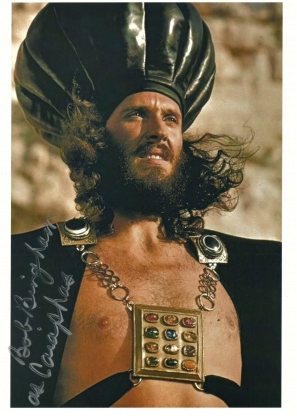
By the Disappointed Housewife for publishing my work. As you can guess, the title "Pilate's Dream" is taken from the song in the Musical Jesus Christ Superstar.

Thursday, October 21, 2021

Time for a Little Variety


Apologies to Variety Pack for not promoting this sooner! They released a mini-issue back at the end of August with work from me in it. Guess it's still in time for Black Friday.

Monday, December 25, 2017

I Think the Name of this Journal Unlocks a Spell or Something...

If you look closely, it says "Anti-Bank"
...but I don't know. I never read Larry Putter and Horse Kicker's Kidney Stone. Anyway, I have two poems in Rosette Maleficarum. One uses pop-up ads as a conceit, the other uses the mysterious ways of high finance.

Wednesday, October 10, 2012

An American Diplomat in Franco Spain: A Book Review


An American Diplomat in Franco Spain by Michael Aaron Rockland (paperback, 178 pages, Hansen) is a memoir from a former member of the Foreign Service who was stationed in Spain during the late 1960s, a period of time when the country was still under the dictatorship of Francisco Franco. The work is a quick read and filled with many amusing anecdotes along with comparisons between the American and Spanish ways of life. Several famous figures make an appearance within its pages as well as a first-hand account of a military disaster that threatened to become Spain's version of Chernobyl. However, Rockland's work has a tendency to digress into observations about the present as well as his life back in the States after serving in Spain. Both of these make the book seem padded for length. In addition, even though the term "Franco" and "Spain" are in the title, the memoir itself deals little with the everyday reality of life under the Caudillo. 

At the heart of the memoir is the story of a young diplomat's struggle to put his personal politics and beliefs aside to serve his country abroad. When Rockland arrives in Spain, he is overjoyed to be in a land whose language and culture he admires, but he is dismayed having to work with a fascist regime his parents raised him to oppose. Making matters worse, Rockland often encounters ex-Nazis the government is sheltering at routine diplomatic functions. Rockland does try to resist as best he can without becoming a persona non grata.  In one scene for instance, the author manages to sneak out of having to shake Franco's hand when the dictator comes to an event and the other diplomats have to stand in a line to greet him. As his time at the embassy goes on, Rockland's idealism wears away and when he is transferred from Madrid to Saigon, he decides to leave the Foreign Service for good.   


But he makes the most of his time in Spain and treats the reader to a series of amusing anecdotes and encounters.  As an aspiring writer, Rockland visits the haunts of Ernest Hemingway and meets a female bullfighter who has a secret theory that explains why the famed author killed himself.  Meanwhile, he engages in a battle of wills and wits with his neighbor's dog, whose owners he suspects of being Nazis exiled from Romania.  He also learns to adapt to his position as a Jew in Spain, which means clarifying numerous misconceptions among the Spanish, such as Jews having horns. For his part, he learns not to take offense at such things as the costumes of the Semana Santa despite their resemblance to those worn by certain groups back home. In a particularly fascinating turn of events, Rockland's son auditions for and wins a role in the movie Dr. Zhivago, which was filmed in Spain. 


Through his position at the embassy, Rockland gets to meet some of the important people of the era. One of these is Martin Luther King Jr. The author acts as an unofficial interpreter and assistant to the civil rights leader while he stops in Spain for a brief visit as part of a tour of Europe. In their time together, Rockland gives King a lesson in geography and helps him get over a bout of diarrhea.  King makes Rockland realize his own prejudices, particularly against the South, and that Black Southerners are as much a part of the region and its culture as are its Whites. A little while later, the diplomat meets Ted Kennedy and largely performs the same role for him, except that he also gets to serve as the senator's social companion. This comes with the downside of having to pick up the Senator's bar tab, which serves as another reality check for Rockland because it was his idolization of JFK which lead him into the Foreign Service in the first place.  He is also involved with the diplomatic response to the Palomares incident when a B-52s collided with a Stratotanker over Spain during a refueling mission. The collision caused the bomber to inadvertently drop several hydrogen bombs which had to be retrieved without setting off mass panic. In the end, Rockland went for a swim off the coast with Ambassador Angier Biddle Duke to assuage concerns about radioactivity   


Despite these picaresque incidents and others, they are not enough to justify a book-length treatment for Rockland's years in Spain. All too often, the chapters are bulked up with gratuitous asides which take the reader out of Franco's Spain (or Francoist Spain, why "Franco Spain" was chosen for the title is a mystery) and into the present with only the flimsiest link to the author's experiences in late sixties Madrid. Sometimes the asides can be interesting, such as his observations on bullfighting and tipping, but they still digress, along with his idea to have special personal ads for garlic eaters. All too often, Rockland tackles topics such as Columbus, cosmopolitanism in America, the Protestant work ethic, and our changing terms for Black Americans, instead of discussing the nature of the dictatorship he had to work with.  

An American Diplomat in Franco Spain starts out strong but finishes weak. Perhaps Rockland could have made his memoir about the sixties in general instead of his time in Spain since he often references what he was doing during the decade before and after his tenure in Madrid. He mentions the Kennedys, hearing Bob Dylan for the first time, working in South Vietnam, and dealing with campus strife, all subjects which could be elaborated upon to form a more perfect memoir. It would certainly give Rockland an opportunity to dig through his personal archives to find more interesting pictures. The photographs supplied for the book mainly feature him in a variety of seated poses, either by himself at a desk, or next to older men proudly crossing their legs to show off bit of calf.  

Wednesday, December 15, 2010

On Strike for Christmas


No, this is not a review of the book or the Lifetime movie of the same name. It is instead an invitation to read a poem of mine that was posted up at Vis a Tergo, a literary outfit whose editorial decisions are being made by Yukio Mishima.