Showing posts with label Philadelphia. Show all posts

Friday, March 25, 2022

Live from AWP, it's Poems in Lothlorien Poetry Journal


Here comes the HMS Poetry with Poems, Doot Doot

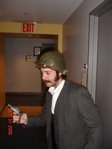
Good morning from Philadelphia, land of Cheesesteaks, Punchy Rambo, Ladies with Horns, and the Freshest of Princes. Here are five poems to contemplate, courtesy of Lothlorien Poetry Journal


Sunday, August 19, 2018

Nardo Goes West, Part One

Friends and readers, this summer I’m embarking on a journey out west. It’ll take me from Brooklyn, New York, to Seattle, Washington. It’ll only last couple of days but I’ll be going through much of the country and seeing the sights and cities pass me along on the way. I won’t by going on the road. No, I’ll be going by rail. Yes, America still allows that. Most of my journey will be on the Empire Builder. It spans the West from Chicago to Seattle. On my way there, I’ll be utilizing the Pennsylvanian from New York to Pittsburgh, and then the Capitol Limited to get to Chicago.

***

Is that the Empire Builder? No, it's the Q Local to 96th Street

My trip began in Brooklyn, more specifically the Ditmas Park neighborhood where I live. Saturday morning, I gathered my things and took the first of my trains: the Q. While it may not have the cushioned seats, bathrooms, or cafĂ© cars that Amtrak trains have, it does have more reliable internet and free entertainment that you can’t shut off! 

I was heading to Penn Station. Thankfully the 2 and 3 are now running between Manhattan and Brooklyn on weekends. This way I could just transfer to the 2 from the Q in Brooklyn and take that to Penn Station at 34th Street. The Q doesn't go there directly, you have to get off near the Empire State Building and walk two long blocks over. Since it was hot and humid, I refused to do that. It was worth it go the extra stops before reaching the first of many destinations.

Every time I have to walk through this corridor in Penn Station,
I expect to see Fred Leuchter taking samples off the tiles here
Once I was at Penn Station, I had time to kill, so I walked around the area. One I reached 1 West 34th Street, I decided to stop. This would be the farthest East I would go. This trip is about going west, WEST like a real pioneer.


I waited by the disco stairs for my train, the Pennsylvanian, which would take me to Pittsburgh


I also used the new men's room. I guess "new" is relative. They fixed the sinks mostly. I didn't see any changes to the urinals or the stalls. Maybe they washed them for the first time since Ford told the city to drop dead. For a while, any men looking to relieve themselves had to follow a series of confusing signs to use a facility outside near Madison Square Garden. It wasn't an outhouse or a Port-a-John. It's wasn't a Sublime Porte either. It was a decent place to go that was exposed to the traffic, wind, and passersby. It's probably how Cornelius Vanderbilt went to the bathroom back when he owned the railroads. Everyone else had to use a chamber pot, or an empty jug from Primo Cappuccino.

The sinks are state of the art, and by "state" I mean horribly inept because they are supposed
to dispense soap, water, and hot air from a single device.

I originally sat in Coach by mistake, but was moved to business class. One good thing about heading west is that the trains have more legroom. Coach or business it doesn't matter. 

Coach class legroom
Business class legroom
The train, like Penn Station was warm. The WiFi was decent. We went through New Jersey to Philadelphia, and from Philadelphia through Pennsylvania to Pittsburgh. I guess you could call it model train country. Everything looks like it was built by enthusiasts of miniature trains. The mountains, the forests, the towns sloping up the sides of valleys, plus the antique stations and industry. Of course, to get there, we had to go through Industrial, and then Zen Nowhere New Jersey. I'm not complaining. I got to see where they assemble Blue Apron meals, plus a large pharmaceutical plant. They were next to one another.

Pictured: the Protein Pack


Pictured: Islands in the Stream

Pictured: Johnstown (not to be confused with the picture above)
There was no need to transfer in Philadelphia. I was able to ride on through. One guy in front of me was supposed to be traveling with a friend of his. Unfortunately he was unable to make it. A snippet of conversation between the Conductor and him:

"He won't be coming, he had a heart attack three days ago."
"Sorry to hear that"
"He was too."

We passed by Paoli, named for a Corsican revolutionary. How strange it is that we used to name things in this country about revolutionaries. Pulaski, Kossuth, Paoli, Kosciusko, etc. The train went by Three Mile Island, and I didn't see any three-headed birds or squirrels with laser vision. I assume that means things are fine. We stopped in Harrisburg, 

Trains of Railroads past haunted this part of the journey
Another one in Altoona, PA
Near the Juniata River, the comments from the conductor over the intercom were interesting, compared to the forceful reading of regulations I hear on the rails between New York City and Washington, D.C. He said we couldn't go barefoot between the cars and that smoking wasn't allowed. Also there would be no chance to take a smoking break because the stops at the stations were short. It was the first time I ever heard a conductor not only making this kind of announcement, but also apologizing to the smokers for the inconvenience. I guess this is what happens when you go west, young man!

More of Altoona, PA

More Altoona, in honor of my Great-Grandfather Norwood. Get it? Nor-wood!
Pittsburgh was a mix of disappointments and pleasant surprises. It has one of the most poorly laid out stations in the Amtrak system. It's small but you still have to go from the street and the waiting room up the stairs or an elevator to a platform. There's also nothing to do there while you wait. I went out and lugged my luggage through the Downtown, worried about what I would do. Luckily the Pirates were playing and they won. This way I was treated to a show of fireworks. it was pretty impressive and long. it was like celebrating the Fourth of July all over again. At midnight, I boarded the second train to complete the next leg of my journey to Chicago: the Capitol Limited. 

This time, I got a roomette to sleep in. 

Said Roomette, with complimentary water bottles

It came came with the amenities of a hotel room and the wild sense of possibilities that come from camping. It also had the space of travel by sea, along with swaying side to side. Still, it was a civilized experience, complete with coat hangers and a closet.

Coat hangers (not wire)
Closet space

There were sheets, pillows, shampoo, soaps, towels, conditioner, beauty kits, tweezers, shower caps, mending kits, and water bottles all offered to me as a traveler.

Sundries
Unfortunately I was traveling at night so there wasn't much to see. I was also too tired to stay awake and look for it. However, if I was traveling at the time, I could've used the swanky chairs of the observation car to watch the Great Lakes fly on by, plus the wonders of the Rust Belt: Cleveland, Toledo, and the time difference between Central and Eastern Standard Time.

You can pretend to be Captain Kirk

Saturday, January 5, 2013

Gay Press, Gay Power: A Book Review

Order it here
Gay Press, Gay Power: The Growth of LGBT Community Newspapers in America
Paperback: 468 pages
Gay Press, Gay Power: The Growth of LGBT Community Newspapers in America Paperback: 468 pages Publisher: CreateSpace Independent Publishing Platform (November 24, 2012) 
Edited by Tracy Baim 

It makes sense that the history of America’s Gay newspapers is in many ways a microcosm of the history of the community itself in the twentieth century. In an era before blogs, social media, and academic journals friendly to LGBTQ issues, newspapers run by Gays and Lesbians served as one of the first safe spaces to publicly present and discuss Queer issues. Of course there were bars, clubs, and private parties, but newspapers offered a way to take the discourse of the community public and provide a means for recording what was going on for future reference. Gay Press, Gay Power: The Growth of LGBT Community Newspapers in America is a clear beneficiary of this archive. This collection of writings, edited and co-authored by Tracy Baim, tells the story of the Gay Press but inevitably reflects the advances achieved and setbacks felt by the LGBTQ community in America as well. However, it is more than just a presentation of headlines that mirror this experience. It deals with the specific history behind a variety of publications, controversies within their staffs, and the nuts and bolts of making the Gay press work. 

The book is divided into several parts that each deal with an aspect of Gay newspapers. Part One covers their history from the start of the twentieth century up to the present. It begins by covering the challenges of producing newspapers for homosexuals and homophiles in an era of obscenity and sodomy laws and an outright hostile mainstream press. The book demonstrates the need for these newspapers when the Chicago Tribune and the New York Times would refer to Gays and Lesbians as nothing but “perverts” in their pages, if they were mentioned at all. Part One details how the most common expression of homophobia among newspapers in those days was their silence and not overt condemnation.

Part Two is written by men and women who were involved with the Gay press as writers and editors. They discuss issues with funding, discrimination, and the bitter infighting within the publications. One of the strengths of Gay Press, is that it does not shy away from depicting the problems faced by Lesbians on Gay-dominated staffs, GLBTQ people of color in having their issues heard, or the struggle for transgender and transsexual Americans to be recognized by these newspapers. Part Three continues by focusing on individual publications in ten different cities, such as the Philadelphia Gay News and the Washington Blade. Meanwhile, Part Four deals with the business of the Gay press and Part Five focuses on issues raised by the rise of the internet and social media. 

Having all these parts written by different authors about different subject matters is both a strength and a weakness for the collection. It does mean that a wide breadth of materials and the media for different communities among the GLBTQ crowd are covered. The pieces not only deal with racial diversity but also regional diversity as well. A history of the Gay press might be excused for focusing primarily on San Francisco and New York City, but this volume goes beyond expectations and deals with Gay newspapers across the country. In particular, it focuses on Chicago (which makes sense since Tracy Baim co-founded the Windy City Times.) The history of Lesbian papers is well-represented by telling the story of such figures as Lisa Ben who founded Vice Versa, the first Lesbian newspaper in the country. 

This method of division allows for pieces which detail the running of these newspapers and their funding, an aspect often overlooked in consideration of any history on print journalism. Advertising in particular gets a deserving amount of attention in this book and not just because it keeps the Gay press afloat. The growth of companies willing to advertise to in these newspapers is representative of changes in public perception and acceptance of GLBTQ Americans over the course of the past fifty years. Of course, the issues of “pinkwashing” and a lack of advertising featuring Lesbians and Gay people of color are brought up as well. 

However, having so many writers turns the book into a hodgepodge of reviews, essays, memoirs, and predictions about the future of the Gay press. Each section feels more deserving of its own separate books because of these incongruences. There are several downsides to having so many different sections in the book with different authors thrown into the mix. The first is that many details and histories are repeated through the work. Another problem is that an extreme focus on the minutiae of a particular publication can be a drag to get through. Anyone looking for those specifics will be in luck but a reader seeking a general history will find it difficult to get through. A major issue for anybody looking to use the text as a source is a lack of clear citations for many of the passages. In addition, there is little focus on the bisexual press or the bisexual experience within the Gay press. Maybe there was not enough material at the time of compilation for it to warrant inclusion. 

Perhaps the work suffers from the same kind of problems the early Gay Press had, having to be everything for the community in the absence of other publications and other outlets. As Gay Press, Gay Power points out, early newspapers had to serve as a place for news, but also provide opinion pieces, conduct advocacy, produce bar and nightlife guides, showcase a social register, and post various literary offerings. As time went on these separate functions were taken over by other groups, leaving the Gay press with the main task of covering current events from an GLBTQ perspective. Maybe future books will come along and provide a similar function, for instance producing a volume of memoirs from Gay journalists separate from a more formal history of the newspapers they served.

Saturday, June 2, 2012

Things That Have Nothing to Do With Me

Just some links to entertain you this first weekend in June. The first is a link to some songs that my sister made. You can listen to them here :http://nardolilli.bandcamp.com/

An artist has been imagining famous albums as book covers, look at the results and judge for yourself:
http://ceegworld.com/making-art/the-record-books/

And finally, a project where the sounds of our recent technological past are preserved for posterity, called the Museum of Endangered sounds. It even has the background music for Encarta's MindMaze: http://savethesounds.info/


Monday, August 15, 2011

Back in Arlington


Just returned from a trip to Philadelphia to move my sister back before she resumes another year at Temple University. I haven't been to the city since I was eleven and went to go see the ancient artifacts at the  University of Pennsylvania Museum of Archaeology and Anthropology. Needless to say, I didn't see much of the city then. This time was different, since my sister lives away from the Center City, I got to go around the residential neighborhoods. I got to see the good and bad of what the city had to offer. At times you feel like an archaeologist in America's inner cities, seeing beautiful buildings that have decayed and are empty, or that once held the headquarters of powerful companies and now are home to boutiques and bars. 


It made me wonder if the chic parts of Brooklyn once looked like this before they were redeveloped a decade or so ago. I know there are still plenty of bad neighborhoods, but those most of them were never built up with hotels and tall buildings that were then abandoned. I guess it was what the Lower East Side probably resembled in the early 1990s. If such places that were once written off can be brought back to life, perhaps there is hope for Philadelphia, which was once America's largest city, important enough that we had the national bank there. Things are trickling in, to be sure, and it's loss of people has stabilized somewhat, but the city still has 500,000 people less than in 1950.


The infrastructure is there, the history, the culture, the location, but the jobs have to return. It's the same all over the country, in Baltimore, Cleveland, Detroit, Buffalo, Pittsburgh, and in other places. To be sure, the jobs need to return all over the country, but in the inner cities of the Rust Belt they will do the most good, as the economics of suburban sprawl have become unsustainable. If nothing else happens, I suppose the rust belt holds the cards when the inevitable energy crisis comes along and we can no longer import everything from China and run our air conditioners in the Sun Belt 24/7. 


Anyways, the trip is probably the last interesting thing that will happen to me for the rest of the summer. Other updates of note, I had a poem published in Word Salad and have been quoted here by Benjamin C. KrauseHopefully it will not be the last time anyone finds my maxims memorable. Also, happy 30th anniversary to my parents Michael and Pamela Nardolilli, Kansas City's most beautiful couple of 1981.