
...or visit web pages hosted in France and Croatia where poems of mine have just been published. ZVONA i NARI has published two poems from me, and Revue Revolution has work on its English and French sites (photo credit of Christine Stoddard).
...or visit web pages hosted in France and Croatia where poems of mine have just been published. ZVONA i NARI has published two poems from me, and Revue Revolution has work on its English and French sites (photo credit of Christine Stoddard).
.jpg/800px-Flying_into_the_sun_(408191852).jpg)
No, your eyes and minds and your minds eyes don't deceive you. I already posted about a poem I got published in the Red Ogre Review. Has the poem changed? No. Has another one been added? Again, no. Yet, there is something different this time. The medium. Now in addition to reading, you can hear me reading, while you read along too!
Arc Magazine, a publication based in India, has posted three of my poems for you to read. Look at them here.
Called in for Reception, that's the name of my new poem up at Cacti Fur. Combines PR, verse, and a little astronomy.
_-_Flickr_-_EcoVirtual.jpg/1024px-260-365_-_Shit_happens_(Explored)_-_Flickr_-_EcoVirtual.jpg)
 |
| Enter through the gift shop |
 |
| A bird's eye view. Explains the lack of pigeons. |
This is the Lay of Ike. The memorial is located south of the National Mall, near the Air and Space Museum. I suppose it is fitting. The man helped build suburban mall culture and he established NASA. Not that you would learn anything about that from the spread of metal and marble in front of the Department of Education. More on that later. The Memorial has no central point. Its elements are scattered across a plaza without a central point of focus. Instead, there are two bas-relief sculptures and two large columns at either side of the park. Behind them is a sort of mesh fixture elevated above the plaza. At night it is supposed to light up and depict the Normandy Landings (D-Day, not Hastings).
The recent toppling of Rebel monuments has begun a conversation about the nature of memorialization itself. Not just who is to be honored, but how and to what purpose. Unfortunately, the planning for the Eisenhower Memorial happened before these issues came to the forefront of public debate. Not that those responsible for constructing the site are ignorant of them. Debates about memorials were present in academia before they became prominent in the summer of 2020. Still, one wonders how this memorial would look given the fallout of the George Floyd protests. Not that Eisenhower was a unworthy subject who should have been ignored. Then again, he has been absent on the National Mall for decades and Americans seemed more or less able to go on without pausing to remember him.
 |
| blah, blah, blah tell us about the MIC! |
Personal merit, necessity, or legacy aside, there other questions to consider behind the purpose of a memorial. At one time, the idea was to provoke a kind of reverence in a secular temple. Think of the Lincoln Memorial, which brings one up a series of steps to stand under the imposing figure of Lincoln. All white and made of stone, he sits in judgment of the country. After one is done bowing and supplicating below the 16th president, it is time to look elsewhere. Now the view centers on the moving text of the Gettysburg Address. The whole process transforms Lincoln into a holy figure for the nation. He is the martyr who managed to midwife the republic through the birth pangs of a new freedom.
Gradually this approach fell out of favor. An emphasis on movements, particularly involving Women and People of Color emerged. When the “great men” (and women) of history were so memorialized, their monuments became less about reverence and more about education. This might occur through symbolism, or more often than not, actual text, preferably from the speeches of the person being depicted. The FDR Memorial and the WWII Memorials come out of this development. The experience is not of one central figure or architectural feature, but of many disparate elements. Gone is the temple or shrine. They have been replaced by open-air museums. This does pose a new set of challenges. How do you convey so much information about a figure or an event without overwhelming the spectator?
 |
| Will it get some wind for the sailboat? |
The Eisenhower Memorial goes with a minimal approach. It deals little with public perception of Ike, the details of his life, the context of his times, or the effects of his presidency. Eschewing all that, the man’s life is condensed to a couple symbolic vignettes. The approach can be likened to the opera Einstein on the Beach, where snippets of Einstein’s life and work are abstracted to the limits of recognition. Here, Eisenhower is a boy in Abilene. Then, he is a general. Finally, he is a president. Three acts with no drama.
What war did he win? It isn’t clear. Who did we fight? It wasn’t mentioned. Why did we fight? A mystery. According to the available statuary, Eisenhower was simply a general raising a fist at beleaguered troops. The effect is not inspiring. He reminds one of the blowhard officers from Catch-22. His presidency is a foggy recollection in bronze as well. The two decent things he did in office, enforcing desegregation, and condemning the military industrial complex (which, to be fair, he built) go unmentioned. All we see of Eisenhower c. 1953 to 1961 is standing around with people from his administration in the midst of doing something presidential. The firm of Nixon & Dulles & Dulles is nowhere to be seen, presumably off in the distance plotting Operation PBSuccess.
The site is being worked on and in development. The trees they planted are still growing. I presume there is time for other things to be added to the plaza. Maybe they will figure out a way to be nicer to the people working in the Department of Education. Once they had windows looking out on the Mall, and now the view is blocked by a post-modern Bayeux Tapestry. It displays an event they might deal with teaching, but they didn’t carry out! Meanwhile in Langley, their view isn’t obscured by a steel lattice depicting the Bay of Pigs.
 |
| The littlest toilet |
If you do want to learn more about President Eisenhower, there is a gift shop. Inside of it are many books with many words and pictures. There are footnotes and citations galore. Maybe that’s the real purpose of the memorial. Show the inadequacies of stone in order to bring people back to the page. Step one: draw tourists in who recognize the name. Step two: confuse them about the life of Ike. Step three: push people into buying books to explain why people liked him. One of the oldest scams in the…um…book. The site also has restrooms. I don’t know how the ladies’ side of the divide is, but the men’s room has the smallest toilet I’ve ever seen in DC. So it’s got that going for it.
 |
| Who cares about the founder of the highways, go look at some model trains instead |
New poem of mine up at the Red Ogre Review. It is titled "Action Packed." Not to be confused with the happiest place on Earth, Action Park, NJ. The origins of this work are peculiar. While I put these lines in order, the individual words were gleaned from an episode of the old Halkias Bros. Art Stream, (NSFW) especially where they review submissions from their listeners.
 |
| Finding a picture of Cambyses is difficult |
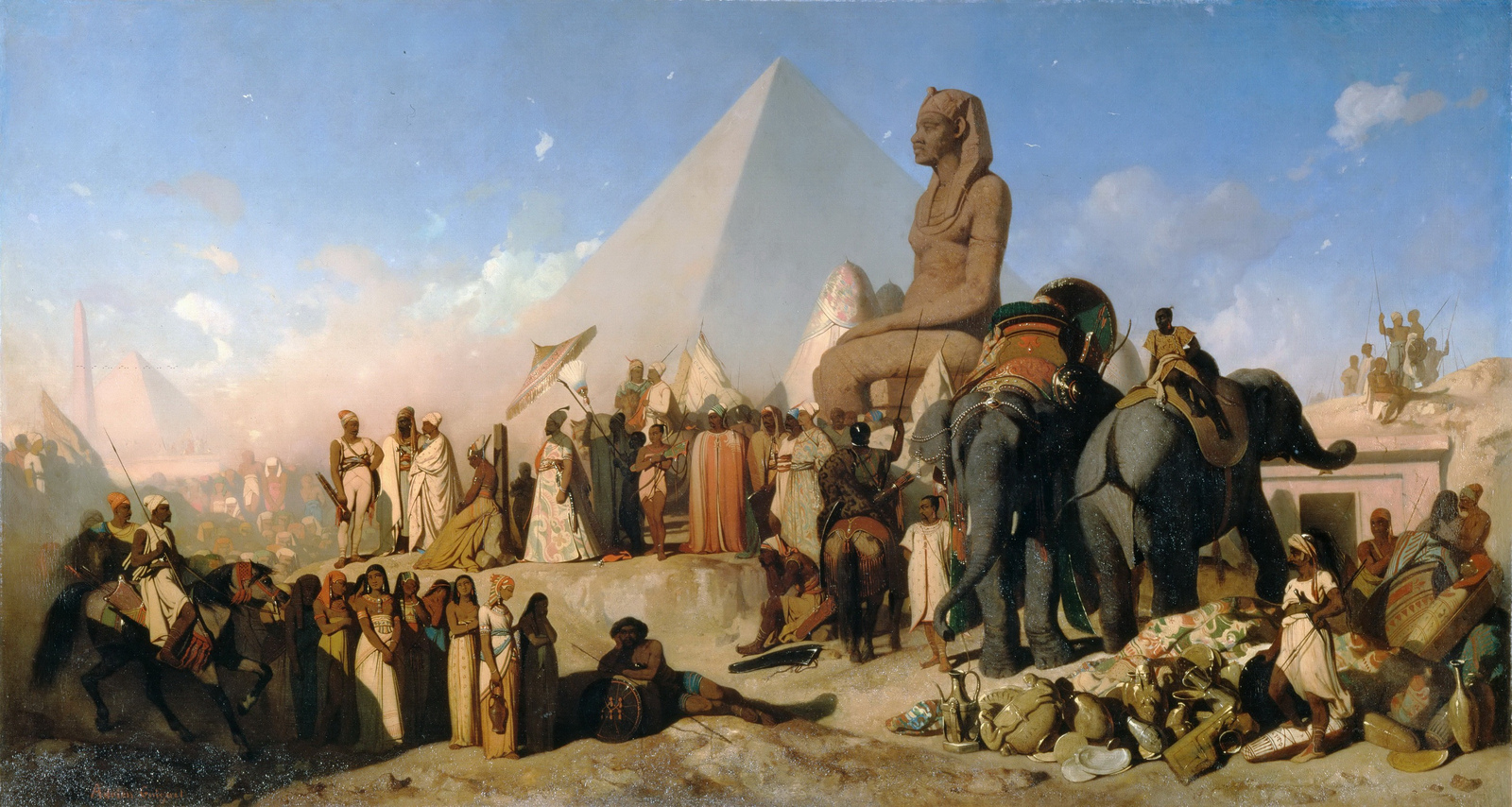
Three poems of mine are in Impspired. One of them involves the name of a Persian King. Another involves vegetables. And finally, the last one discusses writer's block. Fun! (The picture in question on the website was taken by Christine S. Stoddard).
 |
| Where the magic in "La Mosca" happened |
Poems in pairs, ladiex and gentlemxn! Where? At the Sandy River Review. One involves Astronomy, the other Etymology. Read on and...learn?


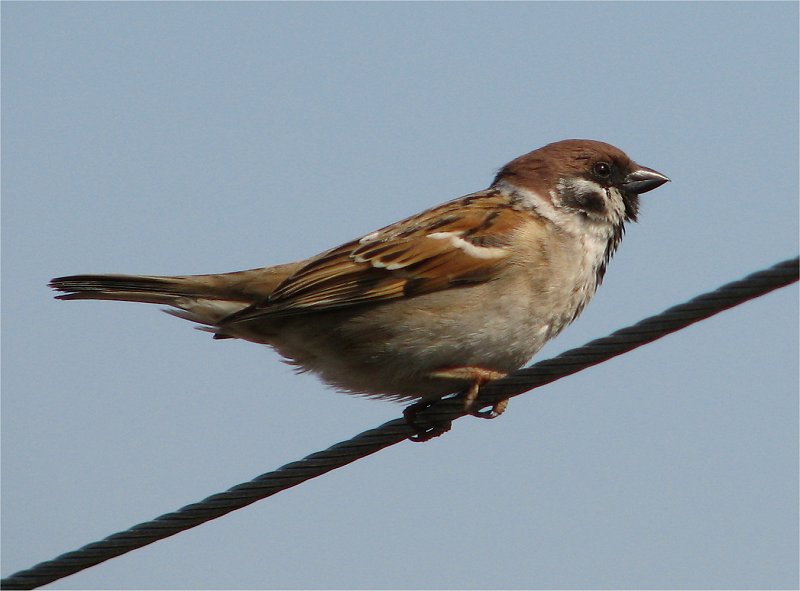
Outing my age, sorry if you thought I was a young hot thang. Anyway, thanks to Jeremy Scott of the Sparrow's Trombone for publishing two funky poems of mine.
 A journal in India, sponsored by Open Leaf Press has published a poem of mine in a journal of theirs, appropriately titled the Open Leaf Review. That's not the title of the poem (though maybe that's a way to get editors' attention in the future...name poems after their magazines) the poem is called Carrot and Writing Stick.


.jpg/1024px-Stack_of_luggages_(Unsplash).jpg)
